What the Label Doesn't Promise: Inside the Unregulated World of Multivitamins
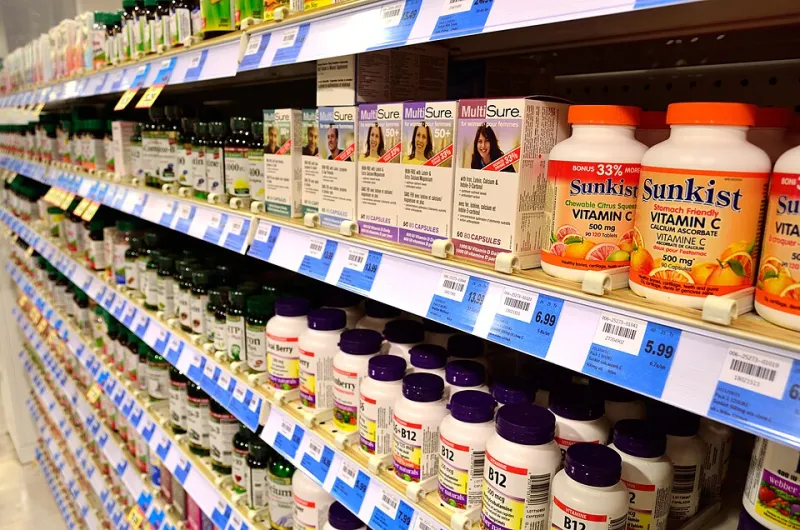
Photo: Raysonho @ Open Grid Scheduler / Grid Engine, CC0, via Wikimedia Commons
Walk into any pharmacy or big-box retailer in the United States and you will find an entire aisle devoted to dietary supplements—colorful bottles, confident claims, and labels that read like guarantees. What most shoppers do not realize is that the regulatory framework behind those labels is fundamentally different from the one governing prescription and over-the-counter drugs.
Under the Dietary Supplement Health and Education Act of 1994 (DSHEA), supplement manufacturers are responsible for their own product safety and labeling accuracy. The FDA does not approve supplements before they are sold. The agency typically steps in only after a product is already on the market and a problem has been reported. In practice, this means the first meaningful quality check for your multivitamin may be the one you perform yourself.
Why "Not FDA-Approved" Actually Matters
The distinction is not a technicality. Prescription drugs undergo rigorous testing for identity, strength, purity, and bioavailability before approval. Supplements face no equivalent gatekeeping. The FDA's post-market surveillance, including surveys of imported and domestic products, has repeatedly found supplements containing ingredients not listed on the label, amounts dramatically different from the declared dose, or contamination with heavy metals such as lead and cadmium.
The FDA's own analyses of imported supplements have flagged a substantial share for containing undeclared pharmaceutical ingredients—an especially serious concern in products marketed for weight loss, sexual enhancement, or energy. A multivitamin that lists 500 mg of vitamin C may deliver far less, or a calcium supplement may contain more lead than a careful consumer would ever knowingly accept.
What Third-Party Certification Actually Verifies
Because the government does not pre-approve supplements, independent certification programs have become the primary quality signal available to American consumers. These are not marketing endorsements; they involve actual laboratory testing.
USP (United States Pharmacopeia) verifies that a product contains the ingredients listed on the label in the declared amounts, does not contain harmful levels of contaminants, will break down and release ingredients in the body, and has been manufactured under good manufacturing practices. The USP Verified Mark appears on products whose manufacturers voluntarily submit to ongoing audits and testing.
NSF International runs a similar program. NSF Certified for Sport goes a step further by screening for substances banned by major athletic organizations, which is why it is common in professional and collegiate sports facilities.
ConsumerLab.com and Labdoor are not certifiers in the same sense; they purchase retail products and publish independent test results. Their reviews can reveal which brands actually match their labels.
A certification seal is not a claim that the supplement works or that you need it. It is a statement that the bottle contains what it says, at the stated strength, without significant contamination. That distinction matters when you are weighing whether the product is worth buying at all.
The Most Frequently Mislabeled Categories
Independent testing over the past decade has identified recurring problem areas:
- Herbal and botanical supplements. Products containing echinacea, ginkgo, St. John's wort, and similar botanicals have repeatedly been shown to contain little or none of the advertised plant, or to include undeclared fillers and, occasionally, prescription drugs.
- Melatonin gummies. A widely cited 2023 analysis found the actual melatonin content in some gummies ranged from less than 1% to nearly 350% of the labeled amount.
- Probiotics. Live-culture counts often fall short of label claims by the time products reach store shelves, and strain identification is frequently vague.
- Multivitamins themselves. While less dramatic than botanical failures, testing has documented underdosed and overdosed nutrients, as well as tablets that fail dissolution testing—meaning they pass through the body without releasing their contents.
A Practical Checklist for Any Supplement Label
Before purchasing, work through this list:
- Look for a third-party seal. USP Verified, NSF Certified, or Informed Choice/Informed Sport indicates independent testing. No seal is not automatically disqualifying, but it shifts more of the burden onto the manufacturer's word.
- Check the Supplement Facts panel for dose units and forms. Reputable products specify chemical forms (for example, "magnesium glycinate" rather than just "magnesium") and amounts in mg or mcg with IU where applicable.
- Beware of proprietary blends. If several ingredients are lumped under a "blend" with a single combined weight, you cannot know whether any individual ingredient reaches an effective dose.
- Scan for red-flag claims. Phrases like "works like a prescription drug," "cures," or "clinically proven overnight" are inconsistent with lawful supplement marketing.
- Note the manufacturer's contact information. A legitimate U.S. address and customer service line suggest accountability. A P.O. box or no domestic contact at all is a warning sign.
- Check for a lot number and expiration date. Products without traceable lot numbers cannot be recalled effectively.
- Cross-check with independent reviews. ConsumerLab and Labdoor results are inexpensive to access and often more informative than any marketing copy.
A Reasonable Standard of Skepticism
None of this means every supplement on the shelf is suspect. Many American manufacturers maintain excellent quality control, and certification programs have raised the floor across the industry. But the legal structure places the burden of verification on the buyer, not the regulator.
Treat a supplement label the way you would treat any unverified claim: as a starting point for questions rather than an answer. If you take prescription medications—particularly blood thinners, thyroid hormones, or immunosuppressants—ask a pharmacist or physician before adding anything to your routine, because interactions are real even when the product itself is honest. In the supplement aisle, an informed consumer is, functionally, the last line of quality control.