Eye-Level Isn't Evidence: Decoding Supplement Placement and 'Pharmacist Recommended' Claims Before You Buy

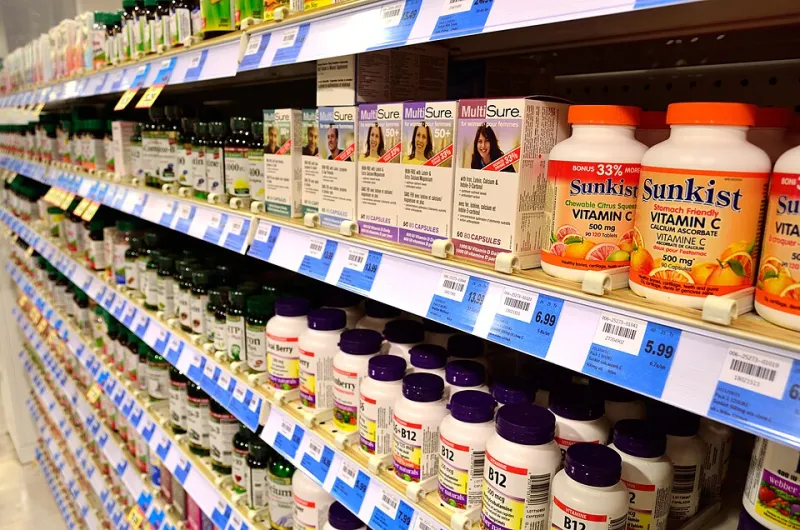
Walk into any major American drugstore chain — CVS, Walgreens, a regional grocer with a pharmacy counter — and head for the supplement aisle. Before you read a single label, a decision has already been made for you. The products at eye level, the ones with glossy end-cap displays and 'Pharmacist Recommended' banners, arrived there through negotiation, not necessarily through science.
Understanding that distinction is one of the most useful skills a supplement shopper can develop, and it costs nothing to learn.
The Shelf Is Real Estate, Not a Ranking
Retail shelf space in the United States operates much like advertising space. Manufacturers frequently pay slotting fees — a standard practice in grocery and pharmacy retail — to secure premium positions: the shelf band between 52 and 68 inches from the floor, aisle end-caps, and checkout-adjacent displays. Products from large companies with substantial marketing budgets tend to dominate these zones.
What this means in practice is that shelf position reflects commercial leverage, not formulation quality. A smaller manufacturer using third-party-tested ingredients may be relegated to the bottom shelf simply because it cannot compete for placement dollars. Conversely, a product at eye level with a celebrity endorsement may contain dosages well below those studied in clinical research.
This is not to say prominent products are inherently inferior. It simply means visibility is a poor proxy for quality — and shoppers who rely on it are outsourcing their health decisions to a retail buyer's spreadsheet.
What 'Pharmacist Recommended' Actually Signals
Few claims on supplement signage generate more trust than 'Pharmacist Recommended.' It evokes a neutral professional evaluating products on merit. The reality is more complicated.
Some pharmacy chains do survey pharmacists, but these surveys are often limited to participating brands, and manufacturers frequently license the resulting seal for use on packaging and displays. In several cases, the designation functions as a marketing asset that companies pay to display rather than an independent endorsement. Pharmacists themselves have raised concerns about the practice, noting that the seal can imply a level of clinical vetting that never occurred.
That said, your local pharmacist remains one of the most underused resources in American healthcare. The difference matters: a paid national seal is advertising; a two-minute conversation with the pharmacist at your own counter is not. Ask them directly whether a specific product interacts with your prescriptions — particularly if you take blood thinners, thyroid medication, or antidepressants, where supplements like vitamin K, iodine, and St. John's wort can cause clinically significant interactions.
Certifications That Carry Weight
Because the FDA regulates supplements under a framework far looser than that for prescription drugs — manufacturers are responsible for their own safety and labeling accuracy — third-party verification becomes the consumer's best defense. Not all seals are equal, but several have earned credibility through consistent auditing:
- USP Verified — Confirms the product contains the ingredients listed at the labeled amounts and is free of harmful contaminants.
- NSF Certified for Sport — Screens for banned substances; the gold standard for athletes subject to drug testing.
- Informed Choice / Informed Sport — Similar banned-substance screening, common among performance products.
- ConsumerLab.com approval — A subscription-based testing service that publishes results many manufacturers display.
A certification seal is not a guarantee of superiority, but its absence on a product making bold claims should prompt caution. Counterfeit and adulterated supplements remain a documented problem in the US market, particularly for weight-loss, sexual enhancement, and bodybuilding products sold online.
A Shopper's Checklist: Evidence Over Placement
Before a supplement goes into your cart, run it through these five questions:
- Is there a third-party seal? Look for USP, NSF, or Informed Choice on the label — not a proprietary 'quality guarantee' invented by the manufacturer.
- Does the dose match the research? A label boasting '1,000 mg' of a nutrient studied at 50 mg may be marketing theater. Reputable sources like the Office of Dietary Supplements at the National Institutes of Health publish evidence-based dose ranges.
- Are claims appropriately worded? By law, supplements cannot claim to treat, cure, or prevent disease. Phrases like 'supports immune health' are legal structure/function claims; 'prevents colds' should send the product back to the shelf.
- Is the ingredient list transparent? Proprietary blends that hide individual amounts make it impossible to evaluate the formula. Full disclosure is the standard among quality-focused manufacturers.
- Did you consult your pharmacist or physician? Especially if you take prescription medication, are pregnant, or are scheduled for surgery — where supplements such as fish oil and ginkgo can affect bleeding risk.
The Bottom Line
The pharmacy supplement aisle is engineered to convert attention into purchases, and attention is a commodity that manufacturers buy. The products that deserve your money are the ones that survive scrutiny — third-party tested, honestly labeled, dosed according to evidence, and cleared by a professional who knows your medication list.
Shelf position tells you what a company spent. The label, verified independently, tells you what you are actually taking. Learn to read the second and ignore the first, and the aisle shuffle stops mattering entirely.